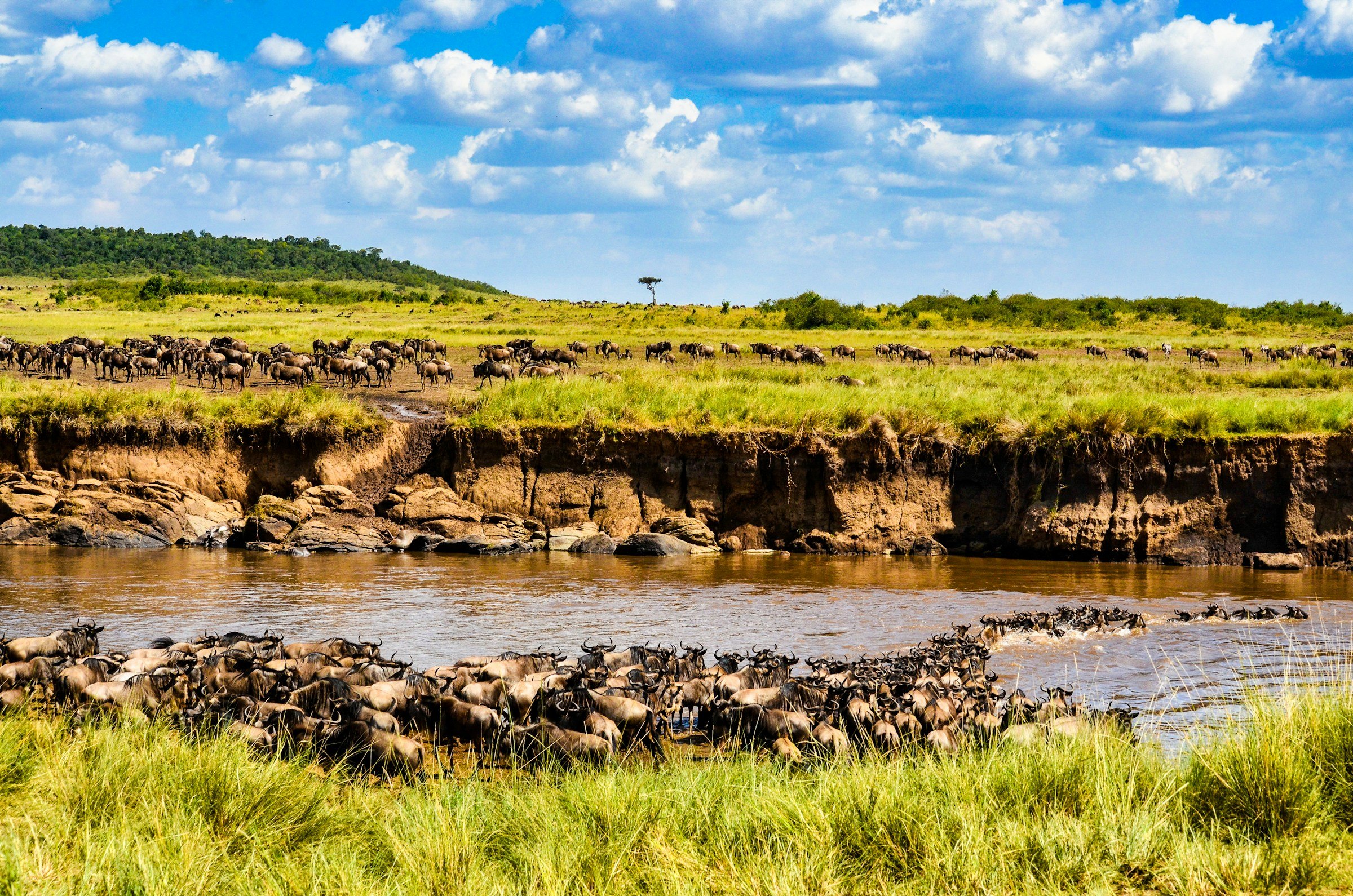
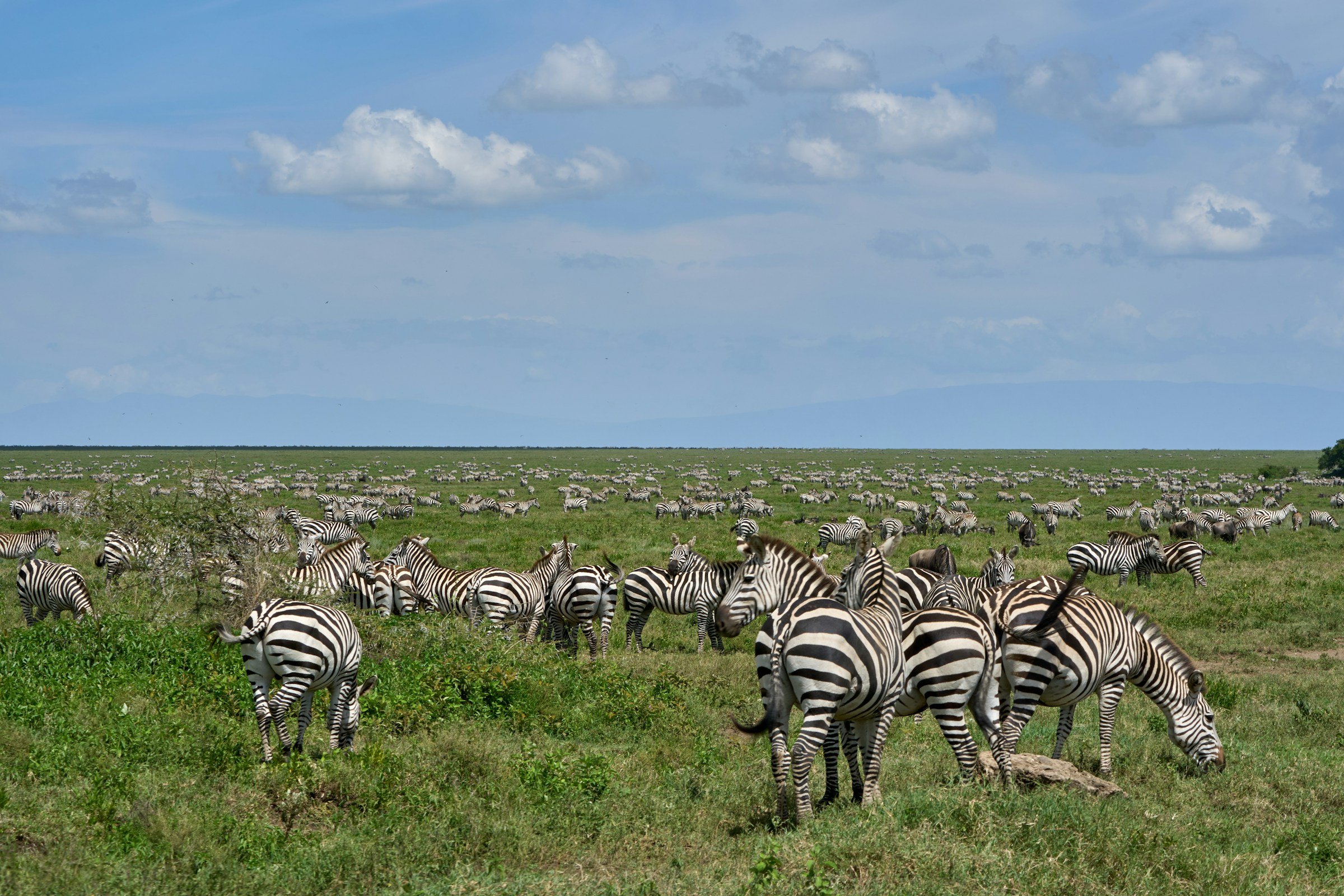
Wildebeest and zebra in Tanzania and Kenya
Great Migration Safaris in the Serengeti and the Maasai Mara
Private safaris planned around where the herds usually are in the month you can travel: calving in the south of the Serengeti, or the Mara River in the north.
Where the Great Migration is in your month, and how to see it
We plan private Great Migration safaris in Tanzania's Serengeti and Kenya's Maasai Mara. The herds move all year, so the month you travel decides where you stay.
In March 2023 the Tanzania Wildlife Research Institute's count from the air estimated 1,366,109 wildebeest, and the Serengeti Biodiversity Program says about 250,000 zebra travel with them.
In the wet season they graze the short-grass plains in the south, where most calves are born within a few weeks around mid-February. In the dry season, from late July to early November, they stay by the Mara River in the north, and on some days they cross it.
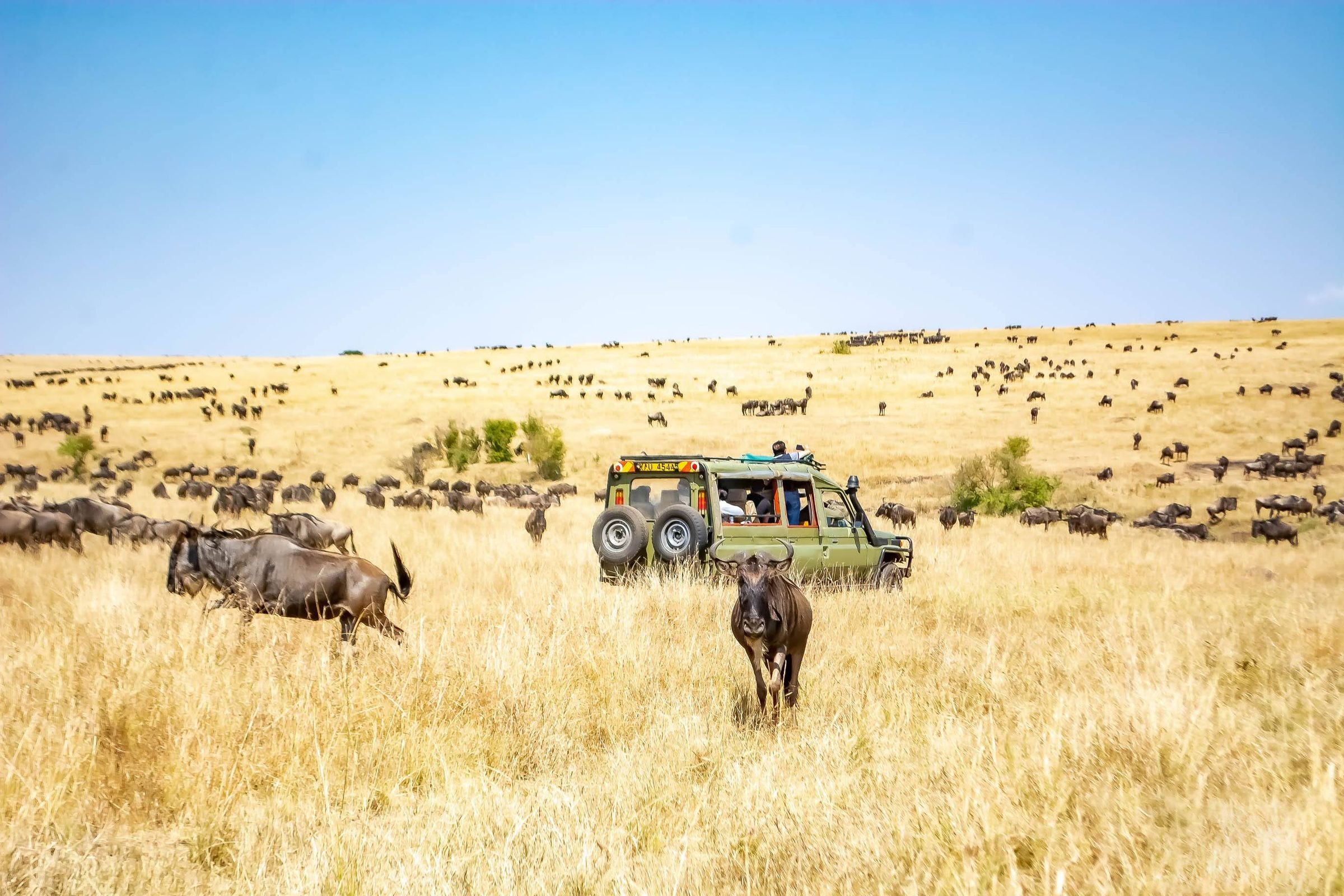
- About 1.37 million wildebeestThe Tanzania Wildlife Research Institute's count from the air, March 2023
- About 250,000 zebraTravel with the wildebeest, the Serengeti Biodiversity Program says
- Calving around mid-February8,000 to 12,000 calves a day at the peak, Tanzania National Parks says
- Mara River: late July to early NovemberWhen the herds are by the river, in the northern Serengeti and the Maasai Mara, the Serengeti Biodiversity Program says
The four areas the herds pass through, and when they are usually in each
From the southern plains in the wet season to the Mara River in the dry season, and back. Open an area to see it.
Ndutu and the southern SerengetiDecember to April
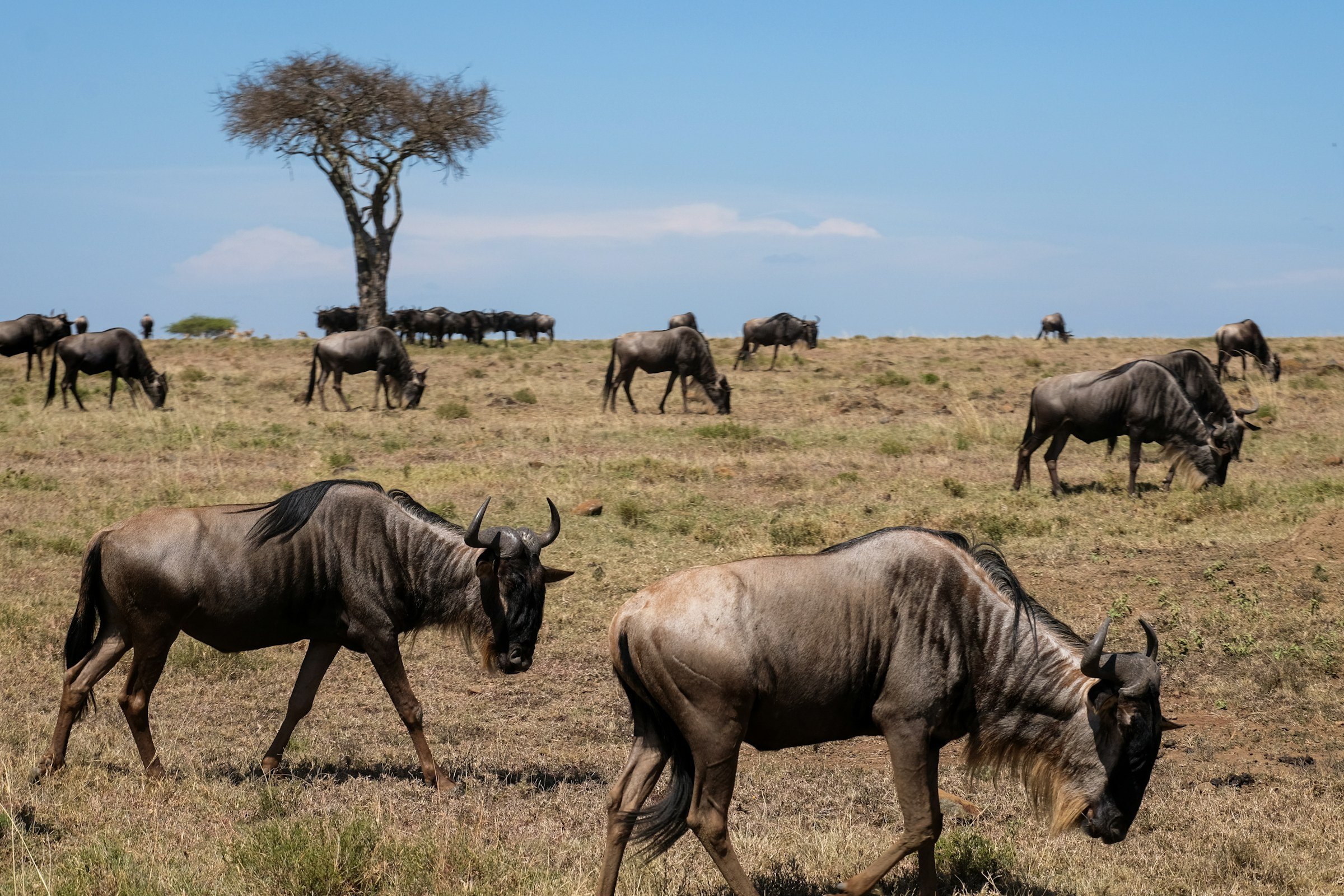
The Ngorongoro Conservation Area Authority calls Ndutu a calving ground, and says the best time to visit is from the end of December, when the herds arrive from the north, until April. Tanzania National Parks says wildebeest prefer to calve on the short-grass plains between Naabi gate and the Ngorongoro highlands.
Where to lookNdutuSouthern Serengeti
The Western Corridor of the SerengetiJune and July

As the plains dry out, the herds move west. Tanzania National Parks places the Grumeti River crossing, in the western Serengeti, in June and July. The Serengeti Biodiversity Program finds them spending more time around Grumeti and Ikorongo than they used to.
Where to lookGrumeti RiverIkorongo
The northern SerengetiAugust to October

The Serengeti Biodiversity Program says the herds stay by the Mara River in the dry season, from late July to early November, and that they only cross it when the flow is relatively low. Around Kogatende, Tanzania National Parks has signposted crossing points along the river, each with a limit on vehicles.
Where to lookMara RiverKogatendeLamai
The Maasai MaraAugust to October
The Mara Conservancy, which runs the Mara Triangle, says the migration usually arrives in June or July and stays until November. In February 2026 it reported that the year before, the herds stayed in the main Maasai Mara reserve, outside the Triangle, for only about a month, but that they still come to the Triangle in good numbers and stay at least three months.
Where to lookMara TriangleMain Maasai Mara reserve
Nobody can promise a river crossing, so you get three nights where the herds usually are in the month you travel
The Mara Conservancy calls crossings difficult to predict, and wrote in February 2026 that most of them now take place in Tanzania. The herds do not always cross: in 2021 only 5 of 28 wildebeest wearing tracking collars crossed the Mara River, the Serengeti Biodiversity Program reported.
So we give you three nights where the herds usually are: the Maasai Mara from late July, or the part of the Serengeti that matches your month. Before we suggest a side of the border, we read the Mara Conservancy's latest monthly report.

Calving season at Ndutu and on the southern Serengeti plains, around February
Tanzania National Parks says more than 250,000 calves are born each year, four-fifths of them within a few weeks around mid-February.
At the peak that is 8,000 to 12,000 births a day, and a calf is on its feet and moving within 3 to 7 minutes. Thousands are born at Ndutu, which the Ngorongoro Conservation Area Authority calls a calving ground, and lion, cheetah and hyena live there all year, the authority says.
- Around mid-FebruaryThe peak of the calving seasonTanzania National Parks
- Between Naabi gate and the Ngorongoro highlandsThe short-grass plains where wildebeest prefer to calveTanzania National Parks
- Late February and March, for the herdsThe best months to see the migration in the Ngorongoro Conservation Area, its authority saysNgorongoro Conservation Area Authority
- Four-wheel drive in the rainsThe authority advises it, so you don't get stuck in the mud. Every vehicle we use is four-wheel driveNgorongoro Conservation Area Authority
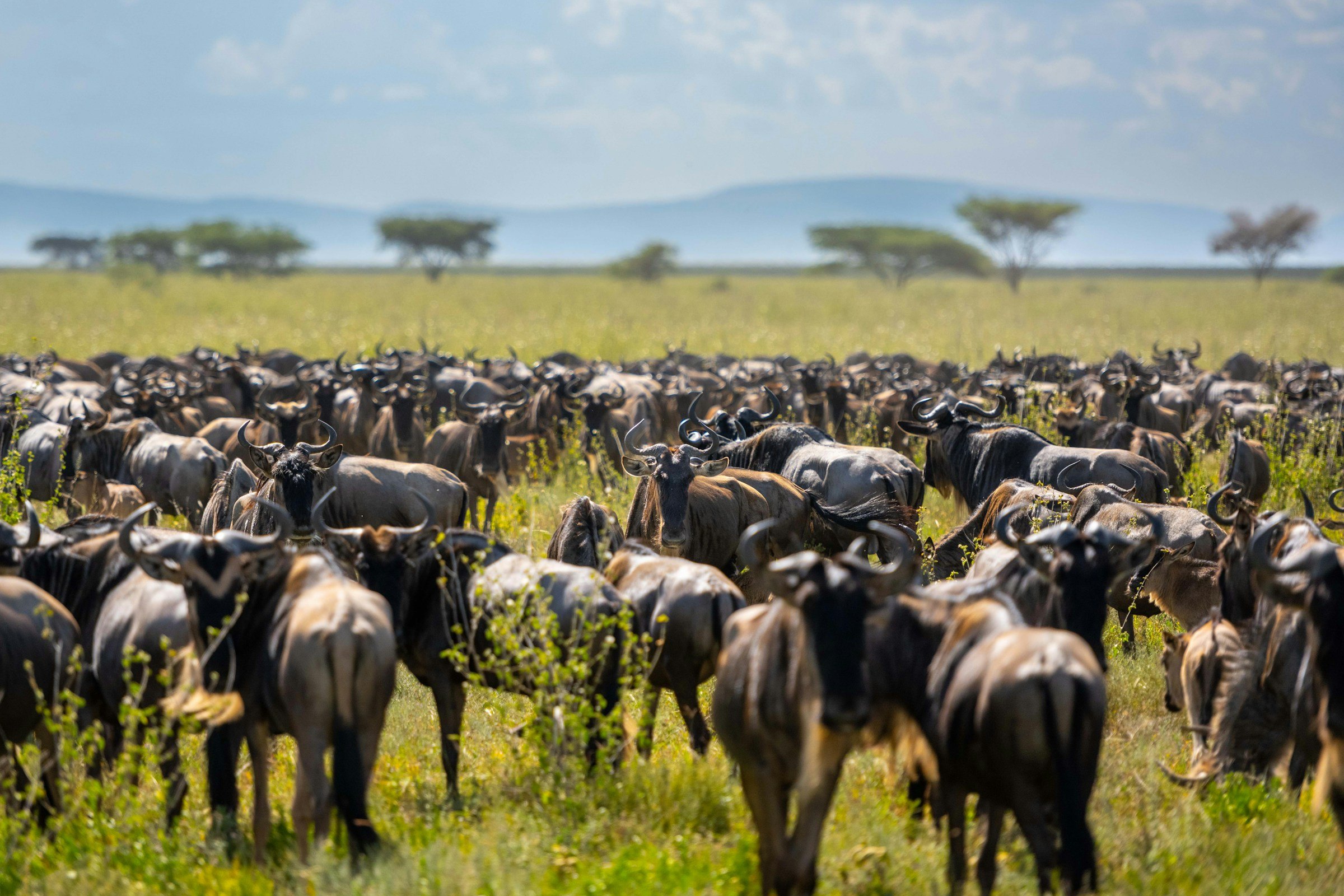
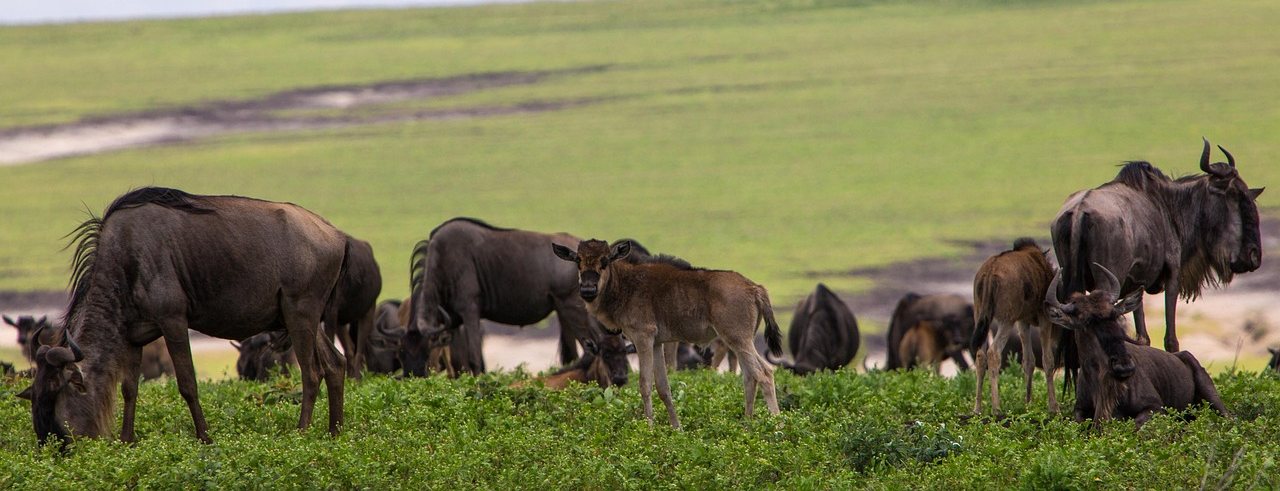
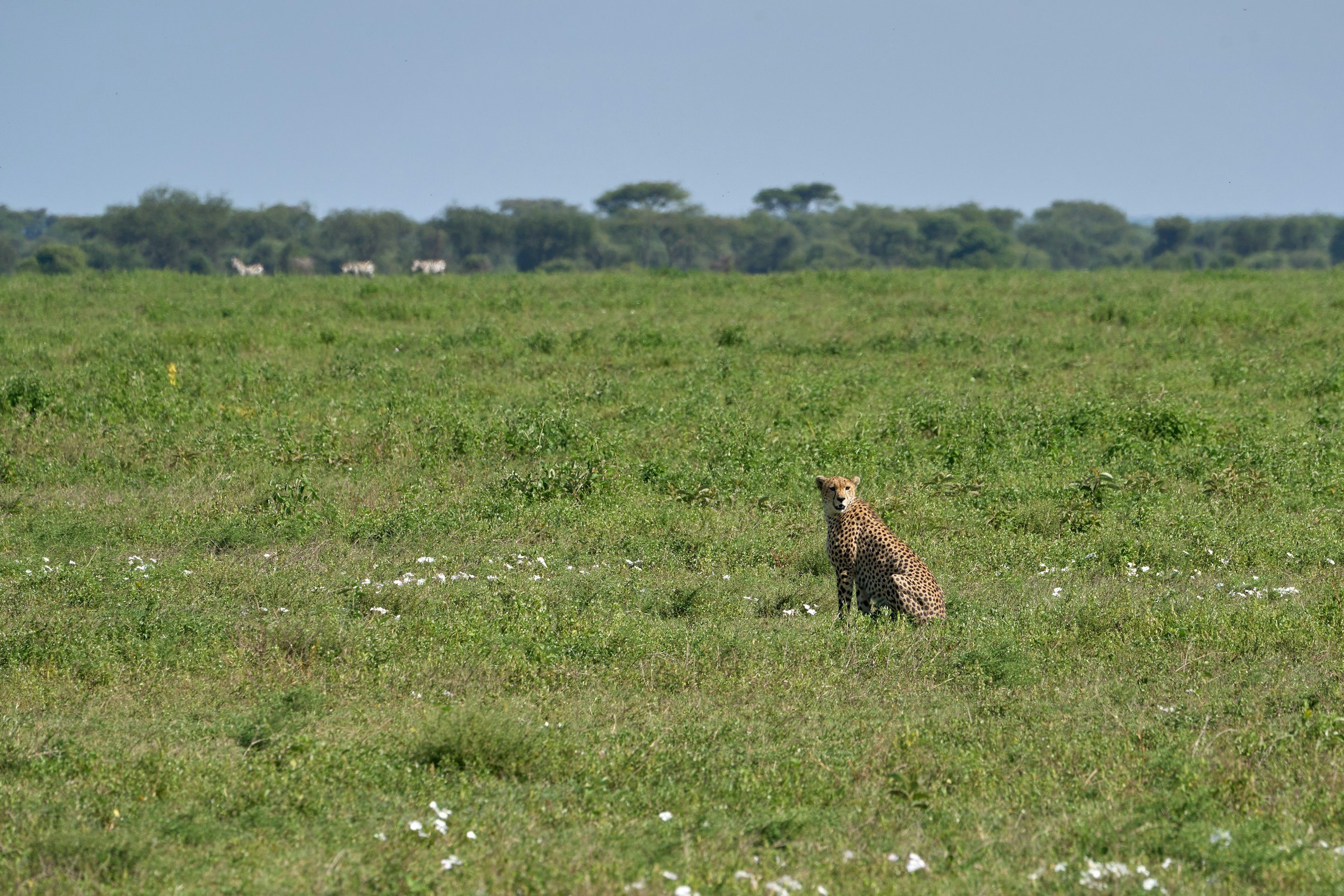

Wildebeest on green plains in the Serengeti; calves in the Ngorongoro Conservation Area; a cheetah at Ndutu; wildebeest and zebra with calves at shallow water, Tanzania.
Watch the migration from Kenya or from Tanzania
The Mara River runs through both countries, and the herds cross the border in both directions. This is how the two sides compare.

Kenya: the Maasai Mara and the Mara Triangle
The Mara Conservancy says most crossings now take place in Tanzania, but the herds still come to the Mara Triangle in good numbers and stay at least three months.
- The Mara Triangle: 510 square kilometresAbout a third of the Maasai Mara National Reserve, between the Oloololo Escarpment, the Mara River and the Tanzanian borderMara Conservancy
- Park fee: USD 200 a day, July to DecemberFor adults from outside East Africa, across the whole Maasai Mara, Triangle included; USD 100 from January to June. Narok County is drafting changes to its finance law, so 2027 rates may differNarok County Finance Act 2023; Mara Conservancy, 2026
- About an hour by air from NairobiSafarilink flies from Wilson Airport to the Maasai Mara three times a daySafarilink
Zebra in Naboisho Conservancy, beside the Maasai Mara.
Tanzania: the northern Serengeti and the Mara River
Tanzania National Parks has its own rules for watching the crossings: signposted crossing points, a vehicle limit at each, and you stay in the vehicle.
- Park entry: TZS 178,850 (about USD 68) for 24 hoursFor an adult from outside East Africa. The fee is set until 14 March 2027; the dollar figure uses the Bank of Tanzania's rate on 24 October 2026Tanzania National Parks tariff
- About two hours by air from ArushaCoastal Aviation flies from Arusha to Kogatende, in the northern Serengeti, twice a dayCoastal Aviation timetable
- Kogatende to Kenya's Maasai Mara, by air and roadCoastal Aviation flies you from Kogatende to Tarime, drives you across the border to Migori and connects with Safarilink to the Maasai Mara. It only flies when two or more passengers book itCoastal Aviation timetable
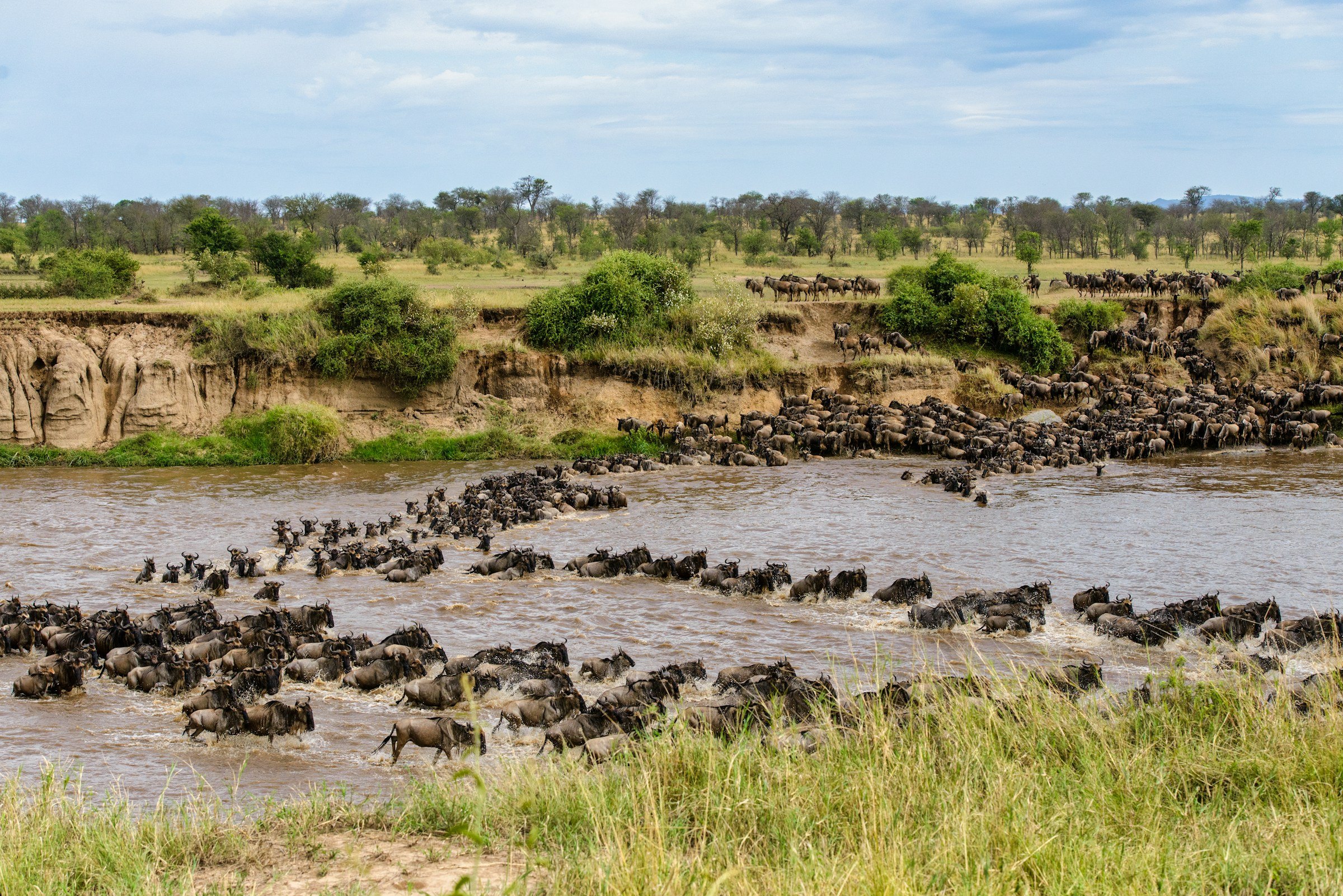
Wildebeest crossing a river in Tanzania.

Rules at the Mara River crossings in Kenya and Tanzania
Both countries keep vehicles back from the crossing points, and both keep you in the vehicle while the herds cross.
- At least 25 metres from animalsAlways, in the Mara TriangleMara Conservancy park rules
- 30 to 140 metres back from the bankAt the Serengeti's 16 signposted crossing points, each with its own distance and vehicle limit. At most of them vehicles wait on one bank, facing one direction, to allow unhindered viewsTanzania National Parks crossing guideline
- No more than five vehicles at a sightingAt any wildlife sighting in the Mara TriangleMara Conservancy park rules
- Stay in the vehicleNo getting out at crossing points in the Mara Triangle, or at the Serengeti crossings unless there is an emergency. Nobody sits or stands on the roofMara Conservancy; Tanzania National Parks
- No vehicle may block a crossingDrivers may not park too close to a crossing point or drive through the herdsMara Conservancy park rules
- Follow the crossing supervisorsAt the Serengeti crossings, Tanzania National Parks reminded all drivers and visitors of this in August 2026Tanzania National Parks notice, 31 August 2026
 Typically 7 to 10 daysKenyaBest of Kenyafrom USD 4,900per personSee the itinerary
 Typically 6 to 9 daysTanzaniaBest of Tanzaniafrom USD 3,250per personSee the itinerary
Longer, shorter, a different month, two countries in one run. Say what you have in mind and a first route and a real price come back within one working day.
Start with a date