Travel guide
When to see the Great Migration river crossings
Which months, Kenya or Tanzania, and how many nights give you the best chance of seeing wildebeest cross the Mara River.
Northern Serengeti and Maasai Mara compared
| Northern Serengeti | Maasai Mara | |
|---|---|---|
| Country | Tanzania | Kenya |
| Crossing season | Usually July to October | Usually July to October, in shorter spells in recent years |
| Crossings in recent years | Most of them, according to the Mara Conservancy | About 14 days of crossings in 2025 and 29 in 2024, east of the river; it used to be about 50 |
| Where you watch | Marked crossing points on the Mara River, around Kogatende | Crossing points on the Mara River, which forms one side of the Mara Triangle |
| Park fee, adult visitor from abroad | TZS 178,850, about USD 68, to enter, per 24 hours, in the 2026 to 2027 high season | USD 200 a day from July to December, USD 100 from January to June, at the Mara Triangle's posted rates |
| Fly in from | Arusha, 2 hours to 2 hours 20 minutes, with a stop on the way | Nairobi's Wilson Airport, about an hour |
| Rules at the river | Vehicles wait at the marked points, on one side of the river only | Vehicles stay back from the bank, and nobody gets out |
The migration, month by month
The herds follow the rain in a loop: south to the short-grass plains to give birth, north to the Mara River in the dry season. These are their usual positions, not a timetable. The rain moves every year, and the herds move with it.
| Month | Where the herds usually are |
|---|---|
| January | Spread across the short-grass plains of the southern Serengeti and Ndutu |
| February | Calving on the short-grass plains: four-fifths of the calves are born within a few weeks around mid-February |
| March | Still on the southern plains, sometimes east towards Loliondo and the Ngorongoro Conservation Area |
| April | Starting north, through Moru Kopjes and Seronera in the central Serengeti |
| May | Through Seronera towards the Western Corridor |
| June | Massing in the Western Corridor before crossing the Grumeti River |
| July | Crossing the Grumeti and heading for the northern Serengeti and the Mara River |
| August | Around the Mara River, in the northern Serengeti and the Maasai Mara |
| September | Still around the Mara River; some start south late in the month |
| October | Usually still around the Mara River |
| November | Leaving the river early in the month, heading south as the rains begin |
| December | Back on the southern plains around Ndutu, ready to calve |
Where the river crossings happen
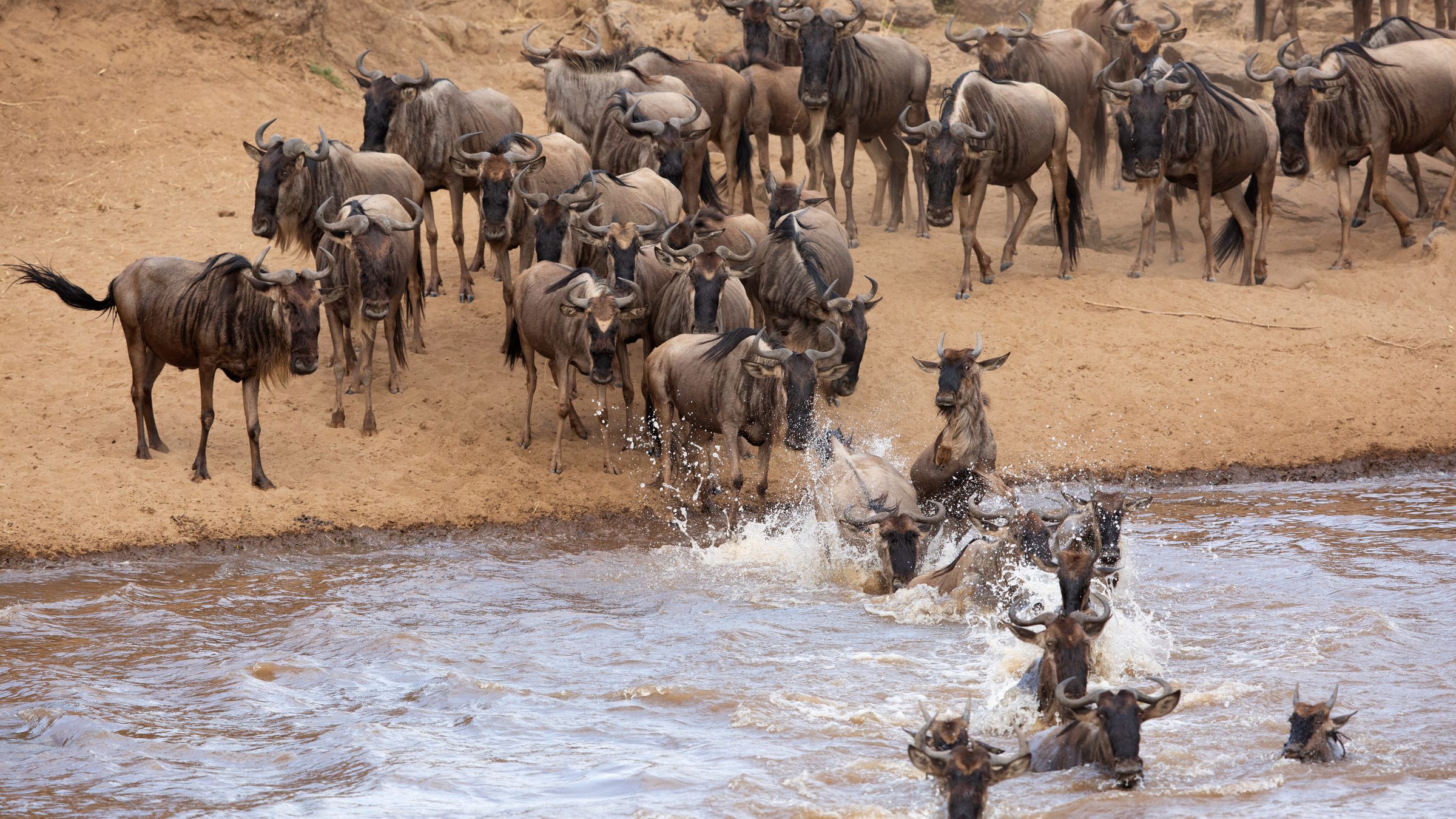
The crossings people travel for are on the Mara River, which runs out of Kenya's Maasai Mara into Tanzania's northern Serengeti. In the dry season the herds graze on both banks and cross between them.
They cross only in the dry season, when the water is relatively low. Around the Mara River that season runs from late July to early November, which is why the crossing window is usually given as July to October.
On the Kenyan stretch, researchers have mapped 12 major crossing sites. In the Serengeti, the park has designated crossing points, each with a sign giving its name, how close vehicles may park and how many may wait.
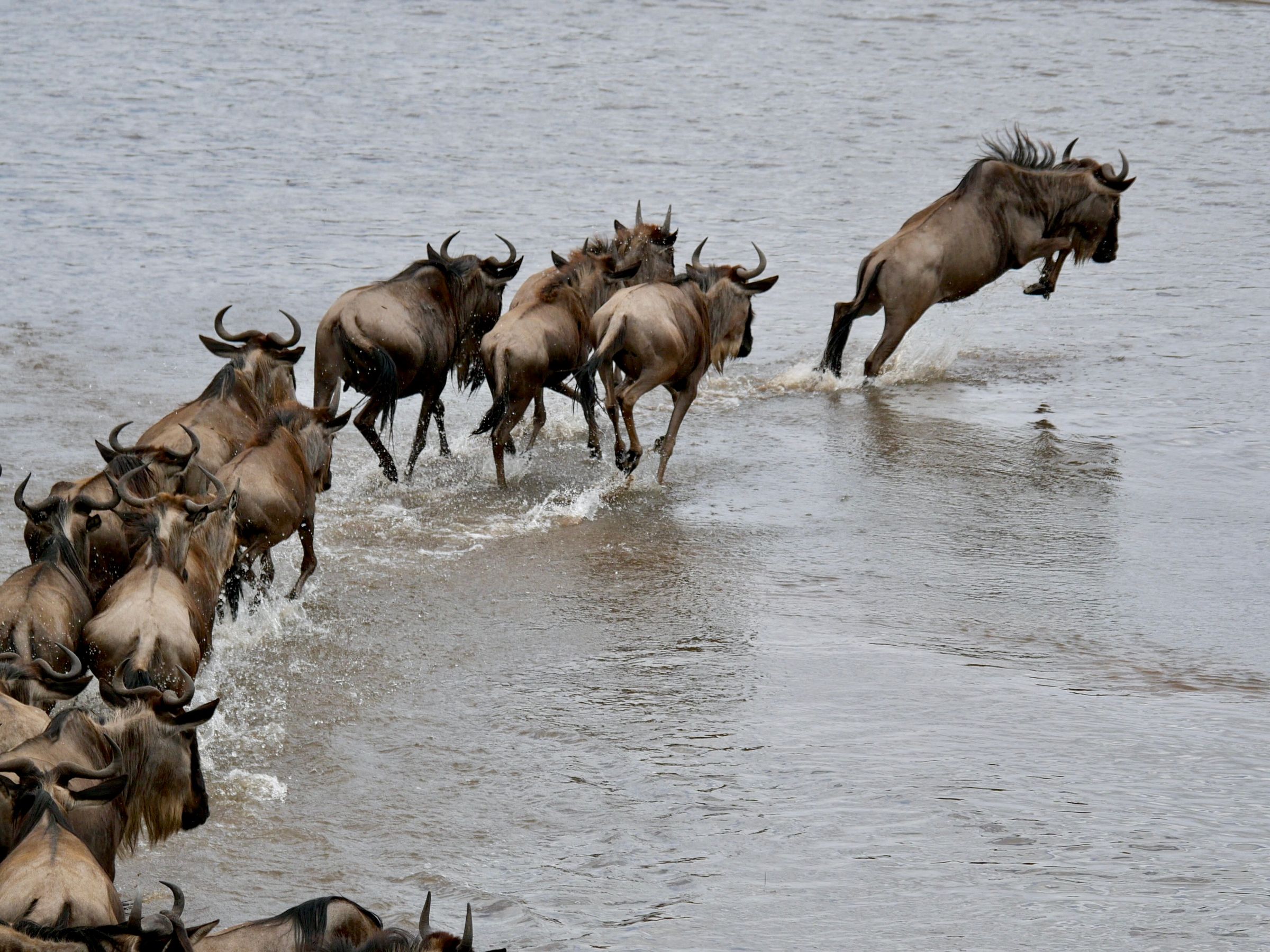
Earlier in the year the herds also cross the Grumeti River in the Serengeti's Western Corridor, usually in June and July, on their way north. Those crossings are smaller, and the Mara is the one worth planning a trip around.
Kenya or Tanzania for the river crossings
The Mara Conservancy, which manages the Mara Triangle on the Kenyan side, wrote in its report for January 2026 that "the majority of crossings now take place in Tanzania".
Northern Serengeti, Tanzania. In recent years most crossings have happened here.
Maasai Mara, Kenya. The Kenyan reserve has two halves for this purpose. The Mara Triangle is the third of it bounded by the Mara River, the Oloololo Escarpment and the Tanzanian border; the Conservancy's reports call the rest of the reserve the Main Reserve.
The two halves no longer behave the same way. In the Main Reserve the herds stayed about a month in 2025, with about 14 days of crossings, down from 29 the year before and about 50 in the past. In the same report the Conservancy wrote that in the Triangle "the wildebeest come in good numbers and stay at least three months".
The Serengeti Biodiversity Program links the decline to tourism development around the crossings and to dry conditions in the Mara Triangle and the Lamai Wedge. Every one of its collared wildebeest used to cross the Mara River; in recent years sometimes fewer than half of them do, and in 2021 only five of 28 collared animals did.
By mid-August 2026 the Conservancy reported about 200,000 animals in the Triangle, most of them between Mara Serena and Mara Bridge, in the north of it. A rainstorm on the 17th sent them back into the Serengeti, and by the end of the month very few were left, though the Conservancy expected many to return.
So base the trip in the northern Serengeti, and add the Mara Triangle by air if you have the days, rather than the other way round.
How many nights to spend near the Mara River
Between 2001 and 2015 the herds spent about 172 days a year around the Mara River and crossed it on about 52 of them: roughly three days in ten.
They tend to cross where they have massed on a bank, and nobody can say which day they will cross.
So give it at least three nights in one area near the river, and spend whole days out rather than moving between camps. If your dates are fixed, August and September are the months the herds are usually around the river.
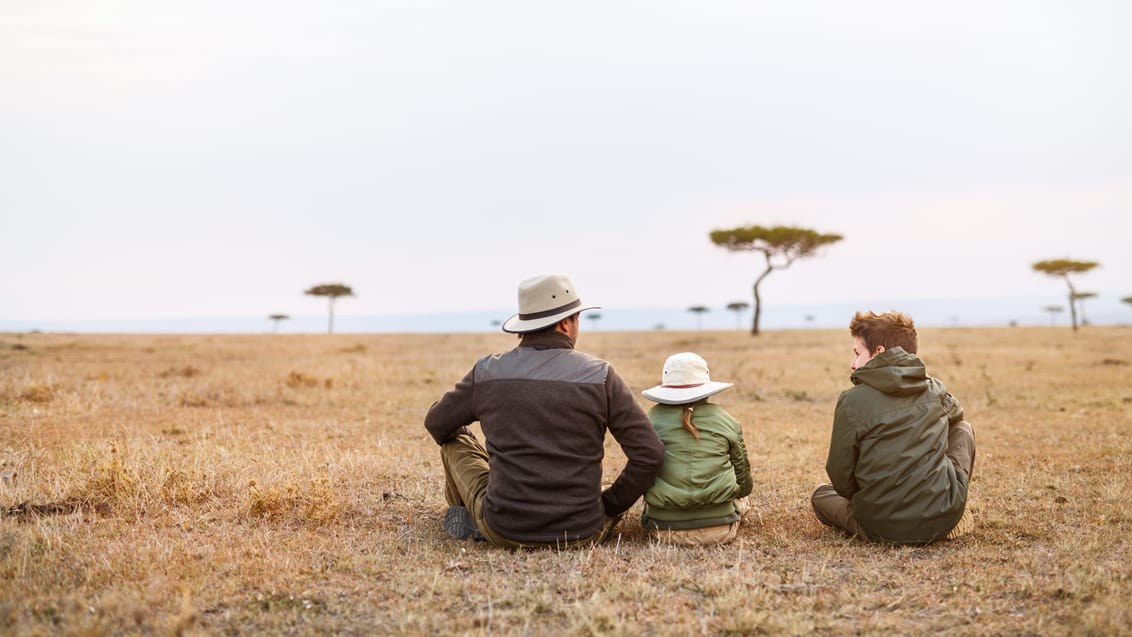
July to October are the months most people ask for, so settle your dates as early as you can.
The rules at the river
Both parks have rules at the crossings. Tanzania National Parks wrote its guideline after what it calls "unethical tourism practices" at the crossing points on the Mara River. Your guide keeps the rules about parking and driving; the rest apply to everyone in the vehicle.
- Stay in the vehicle at a crossing point, on both sides of the border.
- In the Serengeti, park only at the designated crossing points. The sign at each one gives its name, how far from the bank you may park, and how many vehicles may wait.
- At each Serengeti crossing point, vehicles wait on one side of the river only, and face the same way.
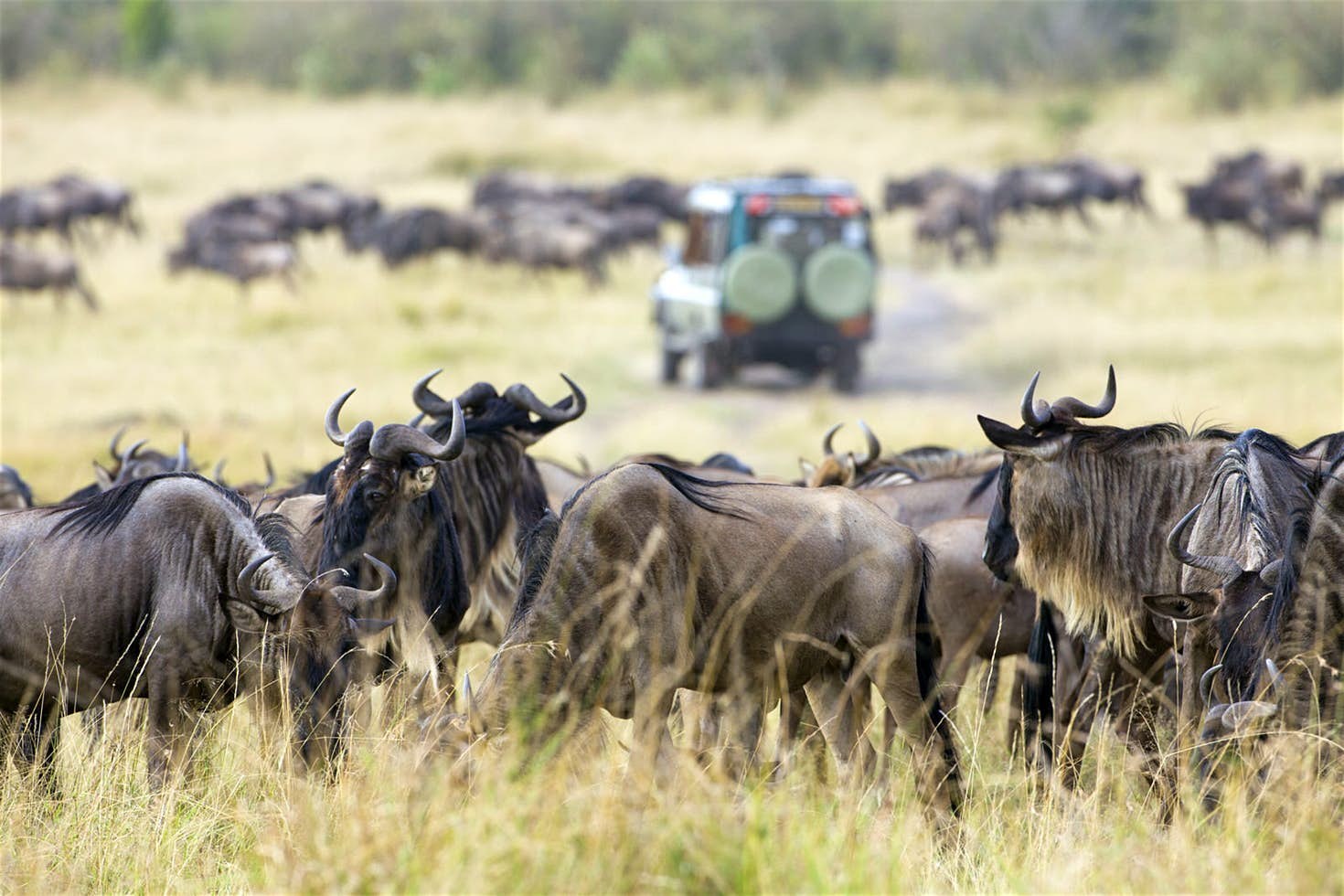
- Once the herds start to gather, stay still. Never park so close that you block their way to the water, and never drive through a herd.
- Keep quiet: no shouting, clapping or cheering.
- Do not sit or stand on the roof of the vehicle.
- No tables and no picnics on the banks of the Mara River in the Serengeti.
- Do not drive across the border between the two parks.
What the parks charge
| Serengeti, Tanzania | Mara Triangle, Kenya | |
|---|---|---|
| Adult visitor from abroad | TZS 178,850, about USD 68, to enter, per 24 hours, from 16 May 2026 to 14 March 2027 | USD 200 a day from 1 July to 31 December; USD 100 from 1 January to 30 June |
| Children | TZS 51,100 per 24 hours, ages 5 to 15; under 5 free | USD 50 a day, ages 9 to 17; under 9 free |
| Sleeping inside the park | A further TZS 153,300 per adult, about USD 58, the rate posted for 1 July to 30 September 2026 | The same daily fee, inside or outside the reserve |
Tanzania National Parks sets the Serengeti fees in Tanzanian shillings; the dollar figures above are at the Bank of Tanzania's rate for 7 October 2026. It says the fees include 18% VAT where applicable, and counts entry as 24 hours from the time you arrive. It has not yet published its rates for July to October 2027.
The charge for sleeping inside the Serengeti is listed separately from the entry fee, and only up to 30 September 2026, so ask us for the October figure rather than budgeting from the one above.
A ticket for the Mara Triangle runs from 6:00 to 18:00 and does not carry over to the next day. The Kenyan rates above are the ones the Mara Conservancy posts for the Triangle.
Flights to the northern Serengeti and the Maasai Mara
To the northern Serengeti: daily flights from Arusha reach the airstrip at Kogatende in 2 hours to 2 hours 20 minutes, with a stop at Manyara on the way.
To the Maasai Mara: scheduled light aircraft leave Nairobi's Wilson Airport several times a day and reach the Mara's airstrips in about an hour.
Between the two: you cannot drive across the border inside the parks. A daily light aircraft links Kogatende and Migori in Kenya, in both directions. It uses the airstrip at Tarime on the Tanzanian side, the road transfer across the Isibania border is part of the fare, and it connects with the Mara flights at the Kenyan end. It runs only if at least two passengers are booked, so your trip designer confirms it before the route is fixed.
The calving season: February on the southern Serengeti plains
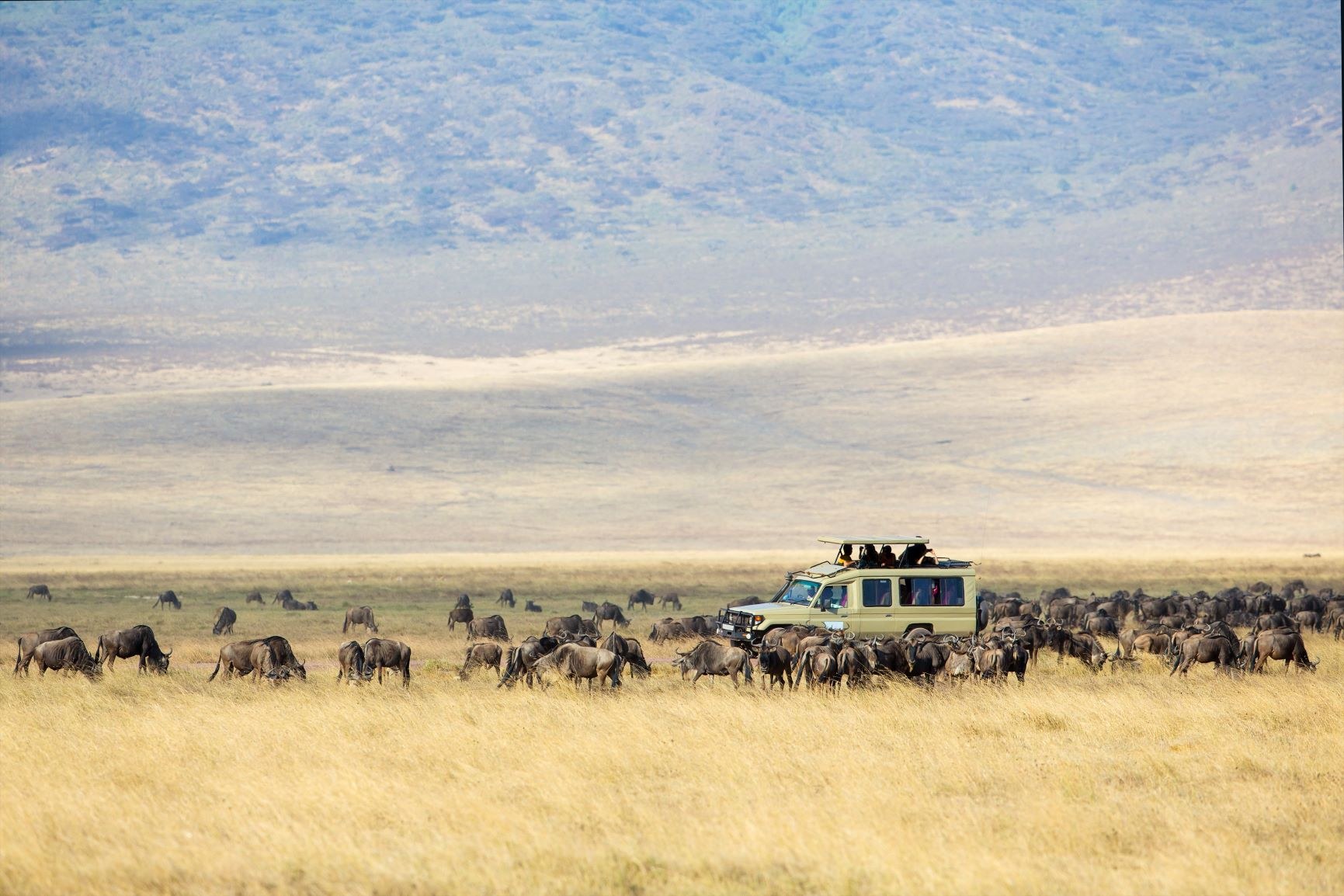
If you cannot travel between July and October, February is the other time to plan around. The herds gather on the short-grass plains between Naabi gate and the Ngorongoro highlands, and more than 250,000 calves are born each year, four-fifths of them within a few weeks around mid-February.
At the peak, Tanzania National Parks puts births at 8,000 to 12,000 a day. There are no river crossings in the calving season, but the herds are close together on open ground, and the predators are with them.
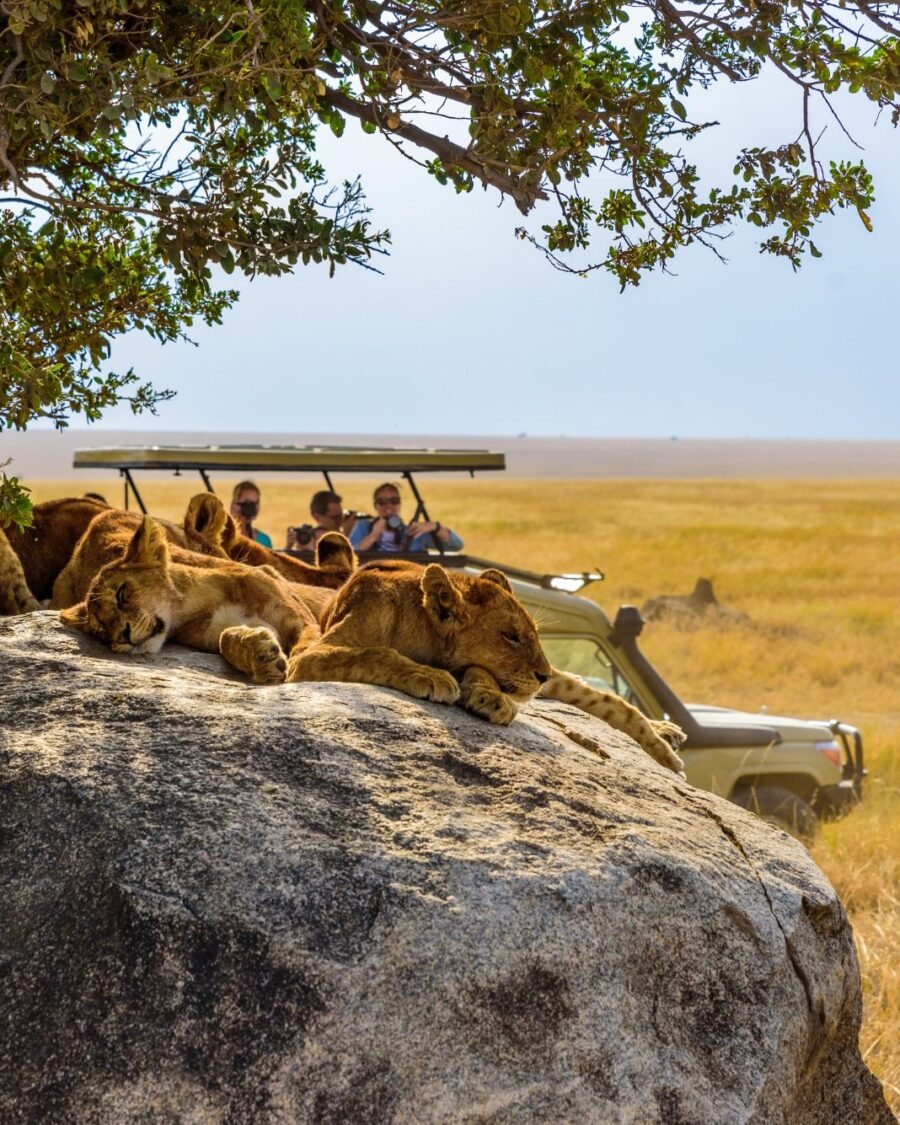 Typically 6 to 9 daysTanzaniaBest of Tanzaniafrom USD 3,250per personSee the itinerary
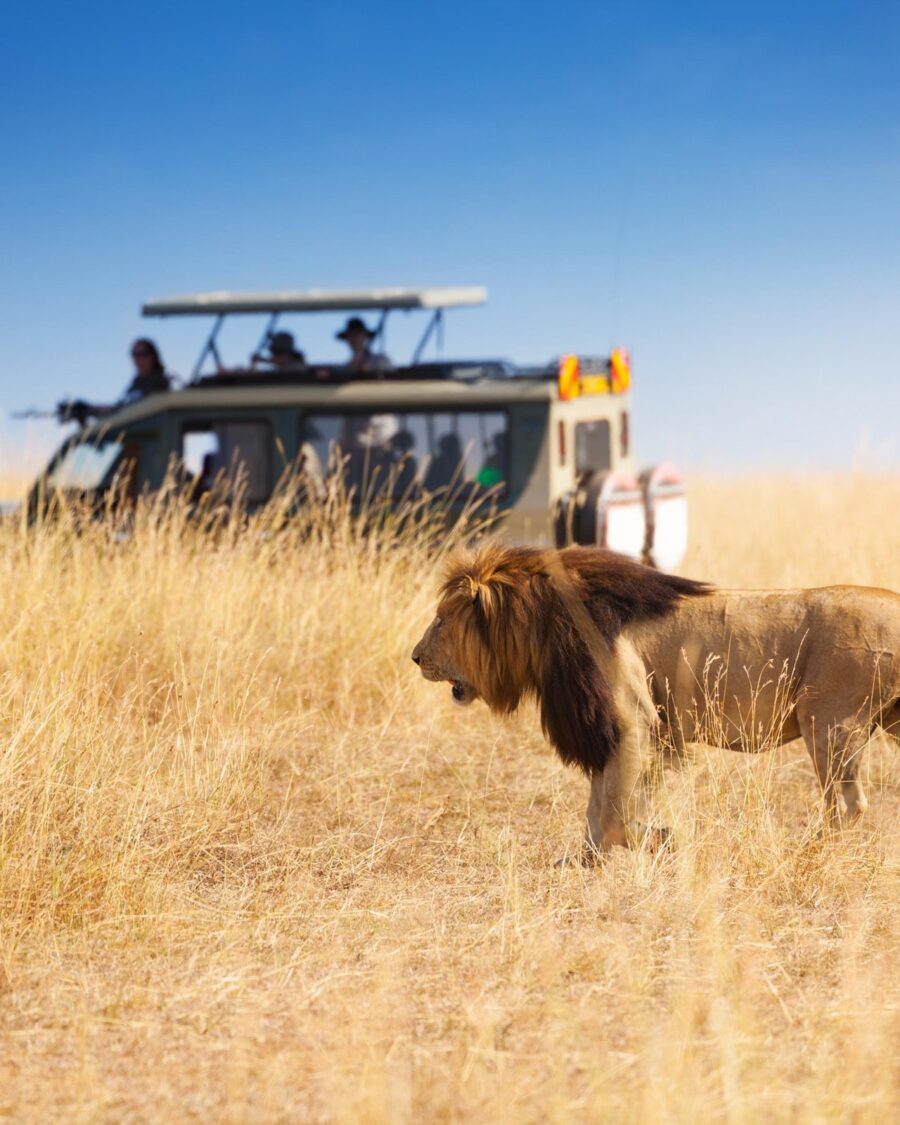 Typically 7 to 10 daysKenyaBest of Kenyafrom USD 4,900per personSee the itinerary
Longer, shorter, a different month, two countries in one run. Say what you have in mind and a first route and a real price come back within one working day.
Start with a dateMore safari travel guides
New guides are being written one at a time. See every guide
 Uganda or Rwanda for gorilla trekkingRead the guide
 What a gorilla permit actually costs, country by countryComing soon
 Where to find the shoebill, and whenComing soon
 A first safari: how long it really needs to beComing soon
 Fitting Murchison Falls into a week in UgandaComing soon