Wild Route Trips

Tarangire, the Serengeti and Ngorongoro

Best of Tanzania

The Serengeti is 15,000 square kilometres and the crater is 260. One is the largest intact grassland migration on earth; the other is a collapsed volcano with everything living inside it. They are two hours apart.

A starting point, not a packagewhere the herds are in your month decides the route

fromUSD 3,250per personfrom, per person, two sharing, full board

Plan this tripSee the itinerary

Where the herds are

The Serengeti is not one place.
Your month decides which part you stay in.

Most Tanzania itineraries put you in the central Seronera valley whatever the month, because it is where the lodges are. It is good year round and it is rarely where the migration is.

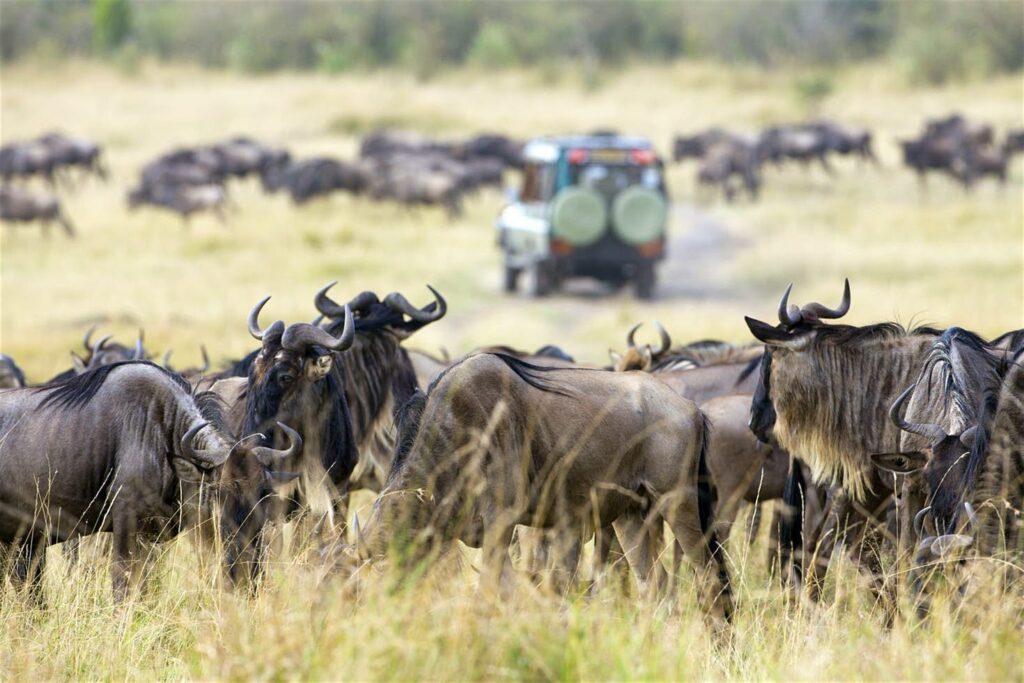
Between December and March the herds are on the southern short grass plains calving, which is the densest concentration of newborn animals and therefore predators anywhere in Africa. From June the columns move north and west, and by July and August they are at the Grumeti and Mara rivers. Staying in the wrong third of the park in the wrong month is the commonest mistake on this circuit.

Ngorongoro is the opposite problem. Everything is there, all the time, in 260 square kilometres with a wall around it, including the most reliable black rhino sighting in East Africa. One full day in the crater is enough and two is too many.
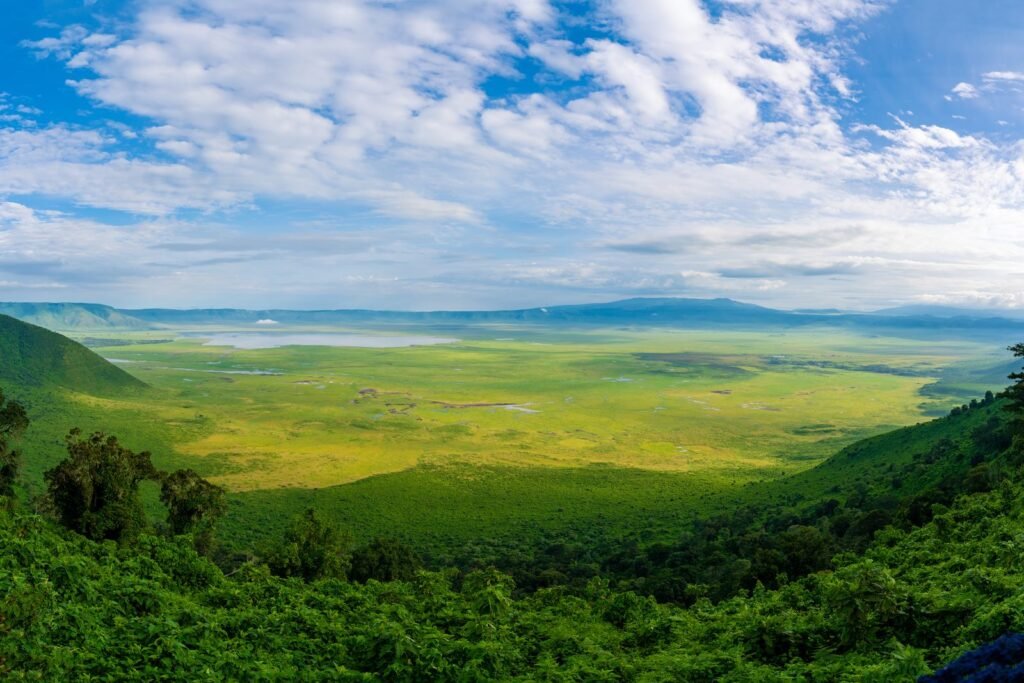
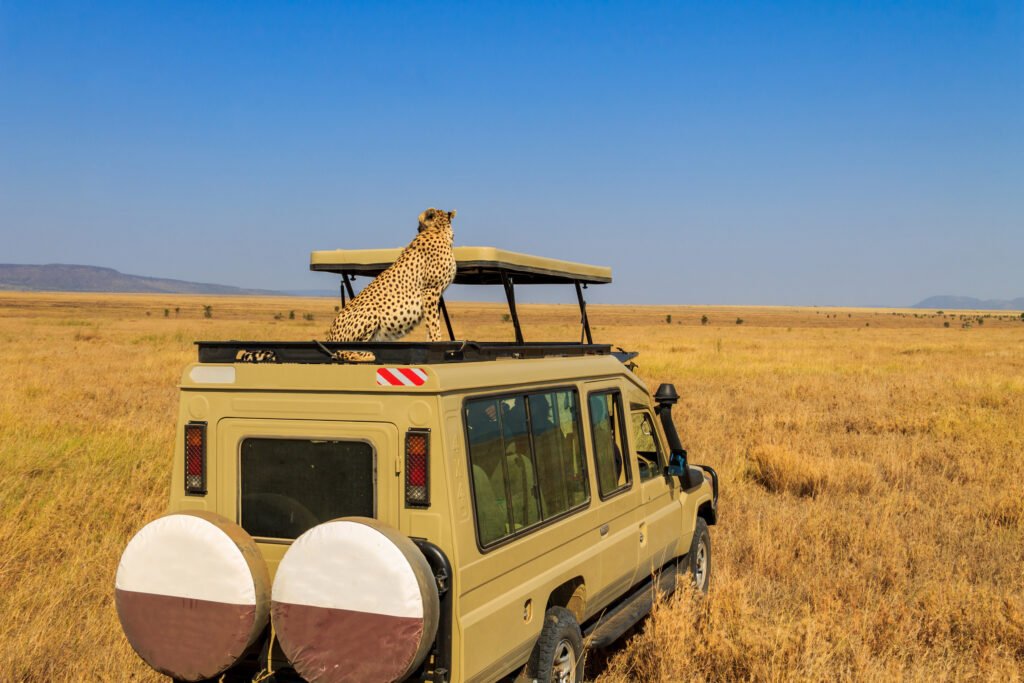
The view across Ngorongoro Crater from the rim, TanzaniaA cheetah resting on the roof of a safari vehicle in the Serengeti, Tanzania. Licensed Adobe Stock 462460742
The essentials

Highlights

DurationTypically 6 to 9 days
TrekkingNone. Game drives, and a balloon if you want one
GroupPrivate. Your group only in the vehicle
Starts and endsKilimanjaro International, or Arusha
FitnessEasy. Long game drives on rough roads
Best monthsJanuary to March for calving. June to October for the north

The journey

Day by day, and the road between them.
The northern circuit, from Kilimanjaro4 stops: Kilimanjaro, Tarangire, Serengeti, Ngorongoro.AKilimanjaroBTarangireCSerengetiDNgorongoro
Stops on the route
Days 1 and 2

Kilimanjaro, Arusha and into Tarangire

We meet you at Kilimanjaro International. If you land late the first night is Arusha, which is a working town rather than a sight, and a sensible place to sleep off a flight.

Tarangire is two and a half hours south west, and in the dry season it holds the densest elephant population in northern Tanzania, drawn to the river when everything around it has dried. The baobabs are the other reason to come: enormous, ancient and scattered across the whole park.

2h 30m from Arusha

Where you sleep

LuxuryLodge on the Tarangire escarpment

PremiumTented camp near the park gate

Days 3 to 6

Three nights in the Serengeti

North west over the Ngorongoro highlands and down onto the plains. The drive is long and the moment the grassland opens out is worth it.

Where you stay depends entirely on your month. December to March we put you on the southern short grass plains for the calving, and the predator density there is unmatched anywhere. From June we move you north and west toward the Grumeti and the Mara River.

The balloon is here if you want it: lifting off before dawn, drifting low over the grass, landing to breakfast laid out on a table in the middle of nowhere.

4h from Tarangire

Where you sleep

LuxuryMobile camp that follows the herds

PremiumTented camp in the relevant sector
Days 6 and 7

One full day on the crater floor

East to the crater rim, and down at dawn. Ngorongoro is a collapsed caldera twenty kilometres across with around 25,000 large animals living inside it and nowhere to go, which makes it the most concentrated game viewing in Africa and the most reliable black rhino sighting in the east.

It is also busy, and it is the one place on this route where you will see other vehicles constantly. Up by mid afternoon, because the light on the rim at the end of the day is the better photograph.

3h from the Serengeti

Where you sleep

LuxuryLodge on the crater rim

PremiumLodge in the Karatu highlands

Day 8

The road back to Kilimanjaro

Four hours east through Karatu's coffee country and the Mto wa Mbu escarpment, back to Kilimanjaro for an evening flight.

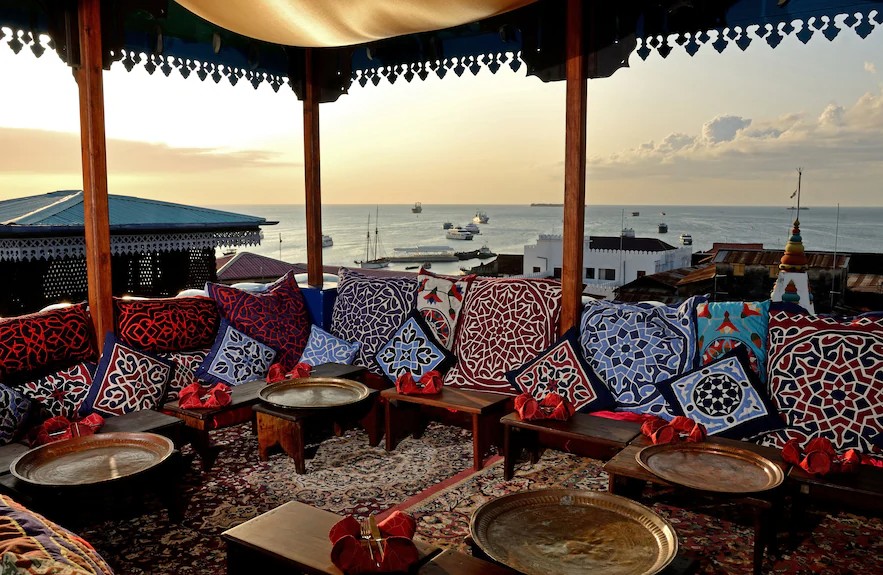
If you are going on to Zanzibar, there are direct flights from the Serengeti airstrips and from Kilimanjaro, and it is the natural way to end this trip. If you are going on to Kenya, the Mara is the same ecosystem over the northern border.

4h, or 1h 30m flying

Where you sleep

Departure, or onward to Zanzibar or Kenya
Dates

The lodges worth staying in hold few rooms, and dry season dates go first.

Give us an approximate date and we check availability against it. No payment, no obligation.

Plan my trip

What your trip includes

Full board throughout

Private 4x4 with a pop-top roof and driver-guide

All park fees, including the Ngorongoro crater descent

Airport collection and return

Bottled water in the vehicle

What it does not cover

International flights

Tanzania visa, USD 50

Balloon over the Serengeti, about USD 600

Tips, alcohol and personal items

Single room supplement

Not quite the trip you had in mind? Every departure is private, so the length and the lodges are yours to change. Tell us what you want.

About the destination

Tanzania

Tanzania journeys

Before you book

What we tell everyone before they book

01
Tell us your month before anything else. It decides which third of the Serengeti you sleep in, and that decision matters more than the lodge, the vehicle or the guide.
02
Ngorongoro fees are the highest in East Africa. The crater descent alone is several hundred dollars per vehicle per day on top of entry. It is why this circuit costs what it does, and we show it as a line rather than burying it.
03
One day in the crater, not two. It is 260 square kilometres. A second day costs the fees again and shows you the same animals in a different order.
04
The roads are rough and the distances are long. Arusha to the central Serengeti is a full day. Light aircraft connect every airstrip on this circuit and we will price them.

What to bring

  • Binoculars, one pair per person
  • A long lens and a genuinely dust-proof bag
  • A warm layer for the crater rim, it is cold at 2,200 metres
  • Neutral colours
  • Sun hat and high factor sunscreen
  • Insect repellent
Questions, answered

Before you ask

When should I come for the migration?

December to March for the calving on the southern short grass plains, which is the densest concentration of newborn animals and predators anywhere in Africa. June to October for the northern river crossings. Your month decides which third of the park you sleep in, and that matters more than the lodge.

Is one day in the crater enough?

Yes. It is 260 square kilometres with a wall around it. A second day costs the fees again and shows you the same animals in a different order. We would rather put that night in the Serengeti.

Why is Tanzania more expensive than Uganda?

Park fees, mainly. Ngorongoro charges for entry and again for the crater descent, which is several hundred dollars per vehicle per day on its own, and Serengeti entry is high. We show them as a line rather than folding them into a round number.

Will I see black rhino?

Ngorongoro is the most reliable place in East Africa for it, and most crater days produce one, usually at distance. It is not a guarantee and anyone offering you one is selling something that is not theirs to sell.

What happens if I need to cancel?

Nothing is paid when you enquire. Camps in the migration sectors hold their own deposit terms in high season and we pass those on to you exactly as they are charged to us. Your deposit amount and balance date are put in writing before you pay anything.

How soon will you reply?

Within one working day, with a route, a price with nothing hidden in it and a straight answer about where the herds will be in your month.

Plan this trip

Tell us roughly when

Every departure is private and built around your dates, so there is no schedule to fit into. Give us an approximate day and we check permits against it.
You get back permit availability, a quote with nothing hidden in it, and an honest view on whether the length suits you. No deposit until you are sure.
Prefer to write to us directly?
hello@wildroutetours.com
A trip designer replies within one working day.
Plan this trip
No payment now, and no obligation. A trip designer replies within one working day.