The migration lives here all year.
It only visits Kenya.
Thirty eight per cent of Tanzania is under some form of protection, which is a larger share than any country on the continent. The Serengeti alone is 14,750 square kilometres, and the migration never leaves it.
The wildebeest migration is a circuit, and roughly eighty per cent of that circuit is inside Tanzania. The herds calve on the southern Serengeti plains in February, move north through the western corridor from May, cross into the Mara around July and return in November. Only the crossing is in Kenya.
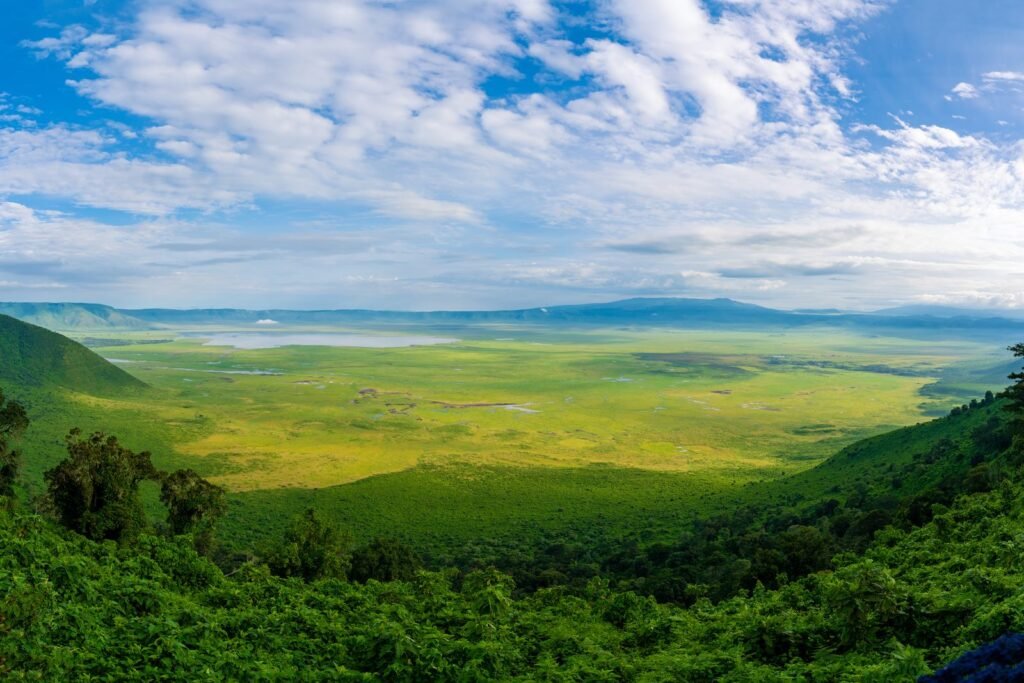
Ngorongoro is the other reason. A collapsed volcano 19 kilometres across with 260 square kilometres of floor, holding around 25,000 large animals that mostly do not leave. It is the densest concentration of wildlife in Africa and one of very few places with a realistic chance of black rhino.
Then there is the rest of it: Kilimanjaro at 5,895 metres, the highest point in Africa and the highest free-standing mountain in the world, and Zanzibar an hour's flight away. Few countries let you put those three things in one itinerary.
Safaris in Tanzania
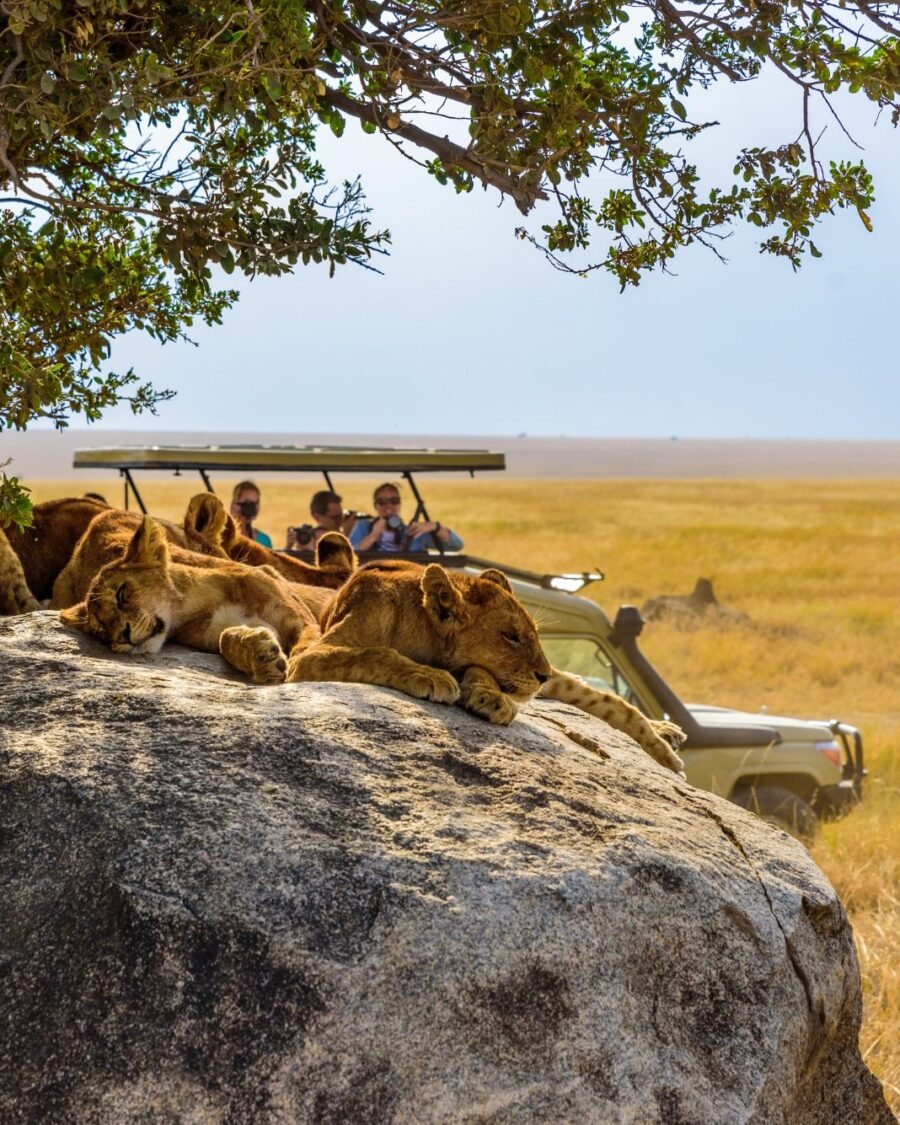
Typically 6 to 9 daysWildlife safariBest of Tanzaniafrom USD 3,250per personSee the itineraryLonger, shorter, a different month, two countries in one run. Say what you have in mind and a first route and a real price come back within one working day.
Start with a dateThe places worth the drive
Serengeti National Park
Open plains in the south, woodland and kopjes in the centre, river country in the north.
The migration circuit runs through all of it across the year, so the right camp depends entirely on your month. February in the south for calving, July to October in the north for the river.
Ngorongoro Crater
A caldera 19 kilometres across with walls 600 metres high, and the densest concentration of large mammals in Africa.
One of the few places with a realistic chance of black rhino, and the only place you will see all of this in a single morning.
Tarangire National Park
Most people treat it as a stop on the way to the Serengeti, which is a mistake between July and October.
In the dry months the river draws herds of several hundred elephant, and the baobab country is unlike anywhere else on the northern circuit.
Kilimanjaro
The highest point in Africa and the tallest free-standing mountain in the world, walked rather than climbed.
Route and length decide whether you summit. Eight days on Lemosho or Northern Circuit, not five on Marangu.
Zanzibar
Stone Town is a UNESCO site and the oldest continuously inhabited Swahili settlement, and the east coast beaches are the best in East Africa.
Four nights after a safari is the usual shape, and the flights from Arusha make it easy.
The year in Tanzania
In Tanzania the question is not only when to go but where the herds are when you do. The two move together.
Calving on the southern plains
Around 400,000 calves are born in roughly three weeks on the Ndutu plains, and every predator in the ecosystem follows.
The most concentrated predator action of the year, and far fewer vehicles than the July crossings.
The long rains
The wettest months. Many camps close in April and May, roads in the west become difficult and the herds are moving.
The lowest prices of the year by a wide margin, and the landscape is at its greenest.
The dry season and the crossings
The classic window. The herds move north through the western corridor from June and reach the Mara River around July.
This is also the right season for Kilimanjaro and for Tarangire. Camps in the northern Serengeti book a year out.
The short rains
The herds come south again, the plains green up and the short rains fall in the afternoon.
November is quiet and well priced. December fills up from the middle of the month.
What we tell everyone
Tell us roughly when
hello@wildroutetours.com
A trip designer replies within one working day.